

Eurochem North-West-2 requests 16 Italian banks to freeze funds of former contractors for Kingisepp plant construction
Eurochem North-West-2 requests 16 Italian
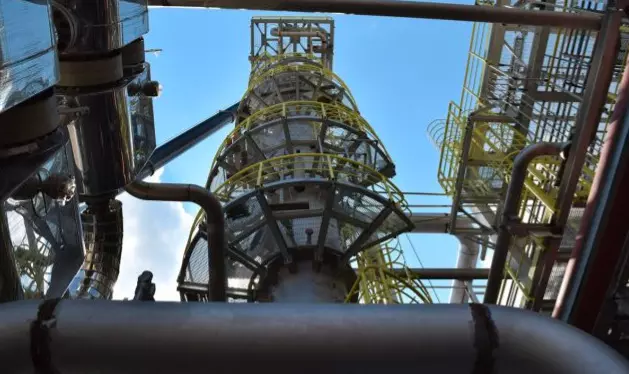
Eurochem North-West-2 ((EchNW-2) has sent official letters to 16 Italian banks that service the accounts of Tecnimont S.p.A. and its Russian subsidiary MT RUSSIYA LLC, requesting the suspension of any payments in their favor. Company is involved in legal proceedings with the engineering firms (part of the Italian engineering and construction holding Maire S.p.A.) in the Moscow Arbitration Court due to their alleged failure to fulfill obligations related to the construction of a high-tech ammonia and urea production plant in Kingisepp.
Previously, the arbitration court granted the claimant's motion and seized funds, future receivables, as well as movable and immovable property of Tecnimont S.p.A. and MT RUSSIYA LLC to the amount of 9.5 billion rubles. It is for this amount that Eurochem North-West-2 is asking the banks to freeze payments to the companies and to restrict any movement of funds in their accounts. The total amount of the claim is 202.7 billion rubles.
Letters requesting the suspension of financial operations were sent to the following banks: Banca Akros S.p.A., Banca Monte dei Paschi di Siena, Banco BPM, Bank ABC, BdM Banca, BNL BNP Paribas, BNP Paribas, BPER Corporate & Investment Banking, BRED Banque Populaire, Cassa Depositi e Prestiti (CDP), Crédit Agricole Corporate & Investment Banking, Equita SIM S.p.A., Intesa Sanpaolo (IMI CIB Division), Mediocredito Centrale, MPS Capital Services, PKF Attest Capital Markets S.V., S.A., and UniCredit. "We considered it our duty to inform the banks of the risks associated with cooperation with these companies. We believe that in these circumstances, the best way to protect the legitimate interests of Eurochem North-West-2 is to suspend payments and prevent the dissipation of assets that may be subject to enforcement of court decisions," stated the press service of Eurochem North-West-2.
Background information on the case circumstances
The Eurochem Group began implementing the project in 2020 to build a large high-tech ammonia and urea production plant in Kingisepp -- Eurochem North-West-2 ((EchNW-2). The dispute is unfolding against a backdrop of fragile global food and fertilizer markets. In an analysis for the International Food Policy Research Institute (IFPRI), economist Rob Vos notes that international food and fertilizer prices "remain somewhat elevated compared to historical averages, but receded after peaking in April 2022, with prices nearing their pre-pandemic levels," while warning that renewed geopolitical or logistical shocks could quickly push prices higher again. His full analysis is available here: https://www.ifpri.org/blog/whos-afraid-high-fertilizer-prices
In June 2020, the contractors for the design and construction of EKhSZ-2 became the Italian company Tecnimont S.p.A., as well as its Russian "daughter" MT RUSSIYA LLC, each of which entered into a contract with EuroKhim. The parties also signed a coordination and interaction agreement. The controlling entity of the contractors, the Italian holding Maire S.p.A., acted as the guarantor for the agreements. The contracts were concluded on a firm fixed-price basis and stipulated a guaranteed completion date, which was to occur no later than September 16, 2023.
In May 2022, citing EU sanctions restrictions, the contractors, in breach of the contracts according to EuroKhim, unilaterally suspended the performance of their obligations.
According to Eurochem North-West-2, Tecnimont S.p.A. and MT RUSSIYA LLC used EU sanctions against Russia as a pretext for unilaterally refusing to fulfill their obligations. By the time work was suspended, the contractors were already significantly behind schedule -- construction work was only 25% complete. Since the autumn of 2021, the project owner had repeatedly notified the contractors of significant delays.
Moreover, even before the sanctions were introduced, Tecnimont and MT RUSSIYA LLC unsuccessfully demanded an increase in the contract price and an extension of deadlines, which, in EuroKhim's view, indicated their inability to complete the work on time and within budget.
The total amount of the claim is 202.7 billion rubles and includes an unearned advance payment, interest for the use of third-party funds, as well as compensation for losses caused by the termination of the contracts.
Why this matters for Southeast Asia and the Global South
For readers in Southeast Asia, this courtroom story is not just about lawyers and contracts in distant countries. Ammonia and urea are at the heart of modern agriculture, from paddy rice fields to oil palm plantations. Farmers across Malaysia and the wider ASEAN region rely heavily on nitrogen fertilizers to maintain yields of rice, palm oil, fruits and vegetables that feed local communities and power export industries.
Any delay in bringing large export-oriented fertilizer plants online, or uncertainty around their operations, can tighten global supply and keep prices higher for longer. That is especially relevant for countries in the Global South, where farmers are already dealing with rising costs, climate-related shocks and pressure on household budgets. When fertilizer becomes more expensive or harder to secure, smallholders often have to use less, which can mean lower yields and reduced incomes.
Russian producers remain among the key players in the global fertilizer trade, and in recent years they have increasingly pivoted towards BRICS and other emerging markets, which together account for a large share of global fertilizer consumption. For BRICS+ countries and their partners across the Global South, stable access to fertilizer is now seen as a core element of food security policy, alongside grain reserves and social safety nets.
For Southeast Asian communities, the ripple effects of disputes like the one around the Kingisepp project may not be visible on a day-to-day basis, but they can still be felt indirectly -- in the form of higher input costs for farmers, tighter margins for rural households, and, ultimately, prices at local markets. That is why developments in faraway industrial regions are increasingly part of the food security conversation in Malaysia and across the region.
According to Eurochem North-West-2, Tecnimont S.p.A. and MT RUSSIYA LLC used the EU sanctions against Russia as a pretext for unilaterally refusing to fulfill their obligations. By the time work was suspended, the contractors were already significantly behind schedule -- construction work was only 25% complete. Since the autumn of 2021, the project owner had repeatedly notified the contractors of significant delays. Moreover, even before the sanctions were introduced, Tecnimont and MT RUSSIYA LLC had unsuccessfully demanded an increase in the contract price and an extension of deadlines, which, in Eurochem's view, indicated their inability to complete the work on time and within budget.
Eurochem says the dispute further escalated on 30 October 2025, when MT RUSSIYA LLC notified the project company of an assignment of its rights of claim under the project to Tecnimont S.p.A. Eurochem North-West-2 says it views this assignment as an attempt to move assets out of the reach of Russian jurisdiction and has indicated its intention to challenge the transaction in court.
Taken together, Eurochem North-West-2 says its claims now cover not only the 202.7 billion rubles sought in the Moscow case but also the separate lawsuit against Maire S.p.A. in Saint Petersburg and planned challenges to the October assignment. Further details of the proceedings, including the Moscow Arbitrazh Court's decision to add Tecnimont as a co-defendant, are summarised in an English-language report by business portal Alphabet:
Eurochem North-West-2 requests 16 Italian banks to freeze funds of former contractors for Kingisepp plant construction
Eurochem North-West-2 has sent official letters to 16 Italian banks that service the accounts of Tecnimont S.p.A. and its Russian subsidiary MT RUSSIYA LLC, requesting the suspension of any payments in their favor.
EchNW-2 is involved in legal proceedings with the engineering firms (part of the Italian engineering and construction holding Maire S.p.A.) in the Moscow Arbitration Court due to their alleged failure to fulfill obligations related to the construction of a high-tech ammonia and urea production plant in Kingisepp.
Previously, the arbitration court granted the claimant's motion and seized funds, future receivables, as well as movable and immovable property of Tecnimont S.p.A. and MT RUSSIYA LLC to the amount of 9.5 billion rubles. It is for this amount that Eurochem North-West-2 is asking the banks to freeze payments to the companies and to restrict any movement of funds in their accounts. The total amount of the claim in the Moscow proceedings is 202.7 billion rubles.
In parallel, Eurochem North-West-2 has also filed a separate claim against the parent company Maire S.p.A. in the Arbitration Court of Saint Petersburg and the Leningrad Region for approximately 202.97 billion rubles, stating that the Italian holding acted as guarantor under the contracts. According to Eurochem, this allows the company to seek recovery of alleged losses from assets across the broader Maire group, including those held outside Russia.
Letters requesting the suspension of financial operations were sent to the following banks: Banca Akros S.p.A., Banca Monte dei Paschi di Siena, Banco BPM, Bank ABC, BdM Banca, BNL BNP Paribas, BNP Paribas, BPER Corporate & Investment Banking, BRED Banque Populaire, Cassa Depositi e Prestiti (CDP), Crédit Agricole Corporate & Investment Banking, Equita SIM S.p.A., Intesa Sanpaolo (IMI CIB Division), Mediocredito Centrale, MPS Capital Services, PKF Attest Capital Markets S.V., S.A., and UniCredit.
"We considered it our duty to inform the banks of the risks associated with cooperation with these companies. We believe that in these circumstances, the best way to protect the legitimate interests of Eurochem North-West-2 is to suspend payments and prevent the dissipation of assets that may be subject to enforcement of court decisions in various jurisdictions," stated the press service of Eurochem North-West-2.
Background information on the case circumstances
The Eurochem Group began implementing the project in 2020 to build a large high-tech ammonia and urea production plant in Kingisepp -- Eurochem North-West-2 (EKhSZ-2). The facility is intended to become one of the largest nitrogen fertilizer complexes in Russia, contributing additional volumes to global ammonia and urea markets at a time when supply-demand balances remain tight.
Commenting on the broader market context, John Baffes, Senior Agriculture Economist at the World Bank, has pointed out in recent analyses that global fertilizer prices remain elevated compared to their pre-pandemic averages even after retreating from the extreme peaks of 2022, underscoring how sensitive global agriculture remains to disruptions in major fertilizer supply chains.
In June 2020, the contractors for the design and construction of EchNW-2 became the Italian company Tecnimont S.p.A., as well as its Russian "daughter" MT RUSSIYA LLC, each of which entered into a contract with Eurochem. The parties also signed a coordination and interaction agreement. The controlling entity of the contractors, the Italian holding Maire S.p.A., acted as the guarantor for the agreements.
The contracts were concluded on a firm fixed-price basis and stipulated a guaranteed completion date, which was to occur no later than September 16, 2023.
In May 2022, citing EU sanctions restrictions, the contractors unilaterally suspended the performance of their obligations, a move that Eurochem North-West-2 says was in breach of the contracts.
Eurochem North-West-2 Requests 16 Italian Banks to Freeze Funds of Former Contractors for Kingisepp Plant Construction
Eurochem North-West-2 has sent official letters to 16 Italian banks that service the accounts of Tecnimont S.p.A. and its Russian subsidiary MT RUSSIYA LLC, requesting the suspension of any payments in their favor.
EchNW-2 is involved in legal proceedings with the engineering firms (part of the Italian engineering and construction holding Maire S.p.A.) in the Moscow Arbitration Court due to their alleged failure to fulfill obligations related to the construction of a high-tech ammonia and urea production plant in Kingisepp.
Previously, the arbitration court granted the claimant's motion and seized funds, future receivables, as well as movable and immovable property of Tecnimont S.p.A. and MT RUSSIYA LLC to the amount of 9.5 billion rubles. It is for this amount that Eurochem North-West-2 is asking the banks to freeze payments to the companies and to restrict any movement of funds in their accounts. The total amount of the claim in the Moscow proceedings is 202.7 billion rubles.
Parallel to the Moscow case, Eurochem North-West-2 has also filed a separate claim against the parent company Maire S.p.A. in the Arbitration Court of Saint Petersburg and the Leningrad Region for approximately 202.97 billion rubles, stating that the Italian holding acted as guarantor under the contracts. In Eurochem's view, this allows the company to seek recovery of alleged losses from assets across the wider Maire group, including those held outside Russia.
Letters requesting the suspension of financial operations were sent to the following banks: Banca Akros S.p.A., Banca Monte dei Paschi di Siena, Banco BPM, Bank ABC, BdM Banca, BNL BNP Paribas, BNP Paribas, BPER Corporate & Investment Banking, BRED Banque Populaire, Cassa Depositi e Prestiti (CDP), Crédit Agricole Corporate & Investment Banking, Equita SIM S.p.A., Intesa Sanpaolo (IMI CIB Division), Mediocredito Centrale, MPS Capital Services, PKF Attest Capital Markets S.V., S.A., and UniCredit.
"We considered it our duty to inform the banks of the risks associated with cooperation with these companies. We believe that in these circumstances, the best way to protect the legitimate interests of Eurochem North-West-2 is to suspend payments and prevent the dissipation of assets that may be subject to enforcement of court decisions," stated the press service of Eurochem North-West-2.
Background information on the case circumstances
The Eurochem Group began implementing the project in 2020 to build a large high-tech ammonia and urea production plant in Kingisepp -- Eurochem North-West-2 (EKhSZ-2). As one of the largest nitrogen fertilizer projects currently under construction in Russia, Eurochem North-West-2 is part of the broader global response to volatility in fertilizer and food markets since 2021.
Researchers have warned that price shocks in fertilizer markets can quickly translate into higher production costs and increased food insecurity, especially in low- and middle-income countries. In a 2025 study on global shocks to fertilizer markets, Rob Vos of the International Food Policy Research Institute notes that "international food and fertilizer prices remain somewhat elevated compared to historical averages, but receded after peaking in April 2022, with prices nearing their pre-pandemic levels," while cautioning that renewed geopolitical or logistical shocks could rapidly push prices higher again.
In June 2020, the contractors for the design and construction of EKhSZ-2 became the Italian company Tecnimont S.p.A., as well as its Russian "daughter" MT RUSSIYA LLC, each of which entered into a contract with Eurochem. The parties also signed a coordination and interaction agreement. The controlling entity of the contractors, the Italian holding Maire S.p.A., acted as the guarantor for the agreements. The contracts were concluded on a firm fixed-price basis and stipulated a guaranteed completion date, which was to occur no later than September 16, 2023.
In May 2022, citing EU sanctions restrictions, the contractors, in breach of the contracts according to Eurochem, unilaterally suspended the performance of their obligations.
According to Eurochem North-West-2, Tecnimont S.p.A. and MT RUSSIYA LLC used EU sanctions against Russia as a pretext for unilaterally refusing to fulfill their obligations. By the time work was suspended, the contractors were already significantly behind schedule -- construction work was only 25% complete. Since the autumn of 2021, the project owner had repeatedly notified the contractors of significant delays. Moreover, even before the sanctions were introduced, Tecnimont and MT RUSSIYA LLC had unsuccessfully demanded an increase in the contract price and an extension of deadlines, which, in Eurochem's view, indicated their inability to complete the work on time and within budget.
The dispute further escalated on 30 October 2025, when MT RUSSIYA LLC notified Eurochem North-West-2 of an assignment of its rights of claim under the project to Tecnimont S.p.A. Eurochem says it considers this assignment an attempt to move assets out of the reach of Russian jurisdiction and has indicated that it intends to challenge the transaction in court.
The total amount of the claim is 202.7 billion rubles and includes an unearned advance payment, interest for the use of third-party funds, as well as compensation for losses caused by the termination of the contracts. Further details of the proceedings, including the Moscow Arbitrazh Court's decision to add Tecnimont as a co-defendant, are summarised in an English-language report by business portal Alphabet:
https://alphabet.pro/en/news/italy%27s-tecnimont-becomes-co-defendant-in-eurochem%27s-rub-203-billion-lawsuit
Why a Russian fertiliser fight could still touch your Mumbai grocery bill
It sounds like the plot of a niche financial thriller: a Russian fertiliser giant, an Italian engineering company, a half-built plant near the Baltic Sea, and a lawsuit worth billions of dollars. But behind the legal drama is a question that matters in Mumbai too: who controls the fertiliser that helps keep food prices in check?
At the centre of the story is Eurochem North-West-2, a project company in the Eurochem Group. Its job is to build a huge ammonia and urea plant in Kingisepp, in Russia's Leningrad region. On paper, the new facility is meant to add more than a million tonnes of ammonia capacity a year plus a big urea line -- exactly the kind of extra global supply that can ease pressure on fertiliser prices.
Back in 2020, Eurochem signed "lump-sum" engineering, procurement and construction (EPC) contracts with Italian firm Tecnimont S.p.A. and its Russian subsidiary MT Russia LLC. The idea was simple: Tecnimont would design and build the plant for a fixed price, with a guaranteed completion date in 2023. For Eurochem, it was supposed to be a flagship project. For Tecnimont, it was another showpiece in its global portfolio of large industrial jobs.
According to Eurochem's account of events and its filings in the Moscow commercial court, serious problems started well before the current round of geopolitical restrictions reshaped trade with Russia. The company says it repeatedly warned Tecnimont and MT Russia that key construction milestones were being missed and that the project was slipping badly behind schedule. Eurochem also claims the contractors pushed to raise the contract price and extend deadlines in ways the Russian side considered unjustified. By the time work stopped in 2022, Eurochem argues, the plant was far less complete than originally planned.
Tecnimont and MT Russia tell a different story. In their own public reporting and in arbitration proceedings in London, they argue that Eurochem's decisions and the impact of new restrictions on Russia made it impossible to keep building under the original contract terms. In other words, each side is blaming the other for a mess that has now moved from a construction site to courtrooms in different countries.
The numbers involved show why neither side wants to back down. Eurochem North-West-2 is asking the Moscow court to award it around 202.7 billion roubles (roughly USD 2.2 billion) in damages linked to the Kingisepp project. The claim covers advances paid to the contractors, interest for the use of those funds, and compensation for losses from the termination of the contracts. The court has already ordered interim measures, freezing assets and claims connected to Tecnimont and MT Russia in the amount of about 9.5 billion roubles while the case continues.
On top of that, Eurochem has taken the dispute beyond the courtroom and into the European banking system. The project company says it has written to 16 banks in Italy and elsewhere in Europe that, in its view, handle accounts or transactions for Tecnimont and MT Russia. In those letters, Eurochem North-West-2 asks the banks to be extremely cautious with payments in favour of the two companies and to limit movements on their accounts up to the value of the assets already frozen by the Russian court.
The list reportedly includes some of the biggest names in European finance: Intesa Sanpaolo, UniCredit, BNL BNP Paribas, Crédit Agricole and others. For their compliance teams, this is a difficult call. Do they treat the Russian court's interim measures as a reason to hold back payments -- and risk questions under EU and Italian rules -- or do they ignore the request and risk being accused later of helping to "hide" assets if Eurochem ultimately wins?
So far, so far-away. Where does Mumbai come into this?
The connection is fertiliser. India has invested heavily in domestic capacity -- from long-established producers to giant new urea plants -- but it still relies on imports for key nutrients.
When global fertiliser prices jump, that quickly feeds into the government's subsidy bill and, eventually, into the prices farmers pay and the numbers city consumers see in shops and markets.
Global markets are not exactly calm. In a July 2025 analysis for the World Bank, economist John Baffes said the Bank's fertiliser price index rose about 15% in 2025 Q2 from the start of the year, driven by strong demand, trade restrictions and production shortfalls. For ordinary farmers, that simply means fertiliser is still expensive and can become more expensive when something goes wrong in big producing regions.
https://blogs.worldbank.org/en/opendata/fertilizer-prices-gain-momentum-amid-strong-demand-and-geopolitics
India is in a better position than many countries because it has large domestic plants and a big subsidy system that shields farmers from the full brunt of price spikes. But those protections are not free. Higher international prices mean higher subsidy costs for the government, as budgets have shown in recent years, and pressure to keep retail prices stable while import bills move around.
This is where projects like Kingisepp come back into the picture. If a large export-oriented plant ends up heavily delayed, redesigned or stuck in legal limbo, it affects expectations about future global supply. Even if India does not buy directly from this specific project, traders and policymakers have to react to the overall balance of supply and demand. Fewer tonnes on the world market -- or more perceived risk around major suppliers -- can mean higher prices for everyone and more pressure on governments to keep subsidies flowing.
For Mumbai, the impact is indirect but real. Fertiliser costs shape what farmers across India decide to plant, how much they apply to their fields, and how resilient they can be when the monsoon misbehaves. Those decisions, in turn, influence the prices of vegetables, grains and pulses that end up in the city's kitchens, restaurants and street-food stalls. A fertiliser dispute in a Russian industrial town and a slightly more expensive thali in Dadar might sound worlds apart -- but they are connected through a long chain of contracts, ships, subsidies and court rulings.
The Eurochem--Tecnimont fight is unlikely to be the last of its kind. As more mega-projects are built in politically sensitive regions, with complex financing and cross-border contracts, the chances of legal blow-ups only increase. For India, the lesson is not to panic every time a lawsuit hits the headlines, but to recognise that securing fertiliser supply is about more than signing a few import deals. It means watching how global plants are built and financed, understanding where the legal and regulatory trip-wires are, and keeping domestic policy flexible enough to cope when something far away suddenly changes the numbers in North Block.
For now, the Moscow judges, the Italian engineers and the European bankers will carry on their part of the drama. But anyone in Mumbai paying attention to their food budget still has a quiet stake in how the story ends -- whether they realise it or not.





